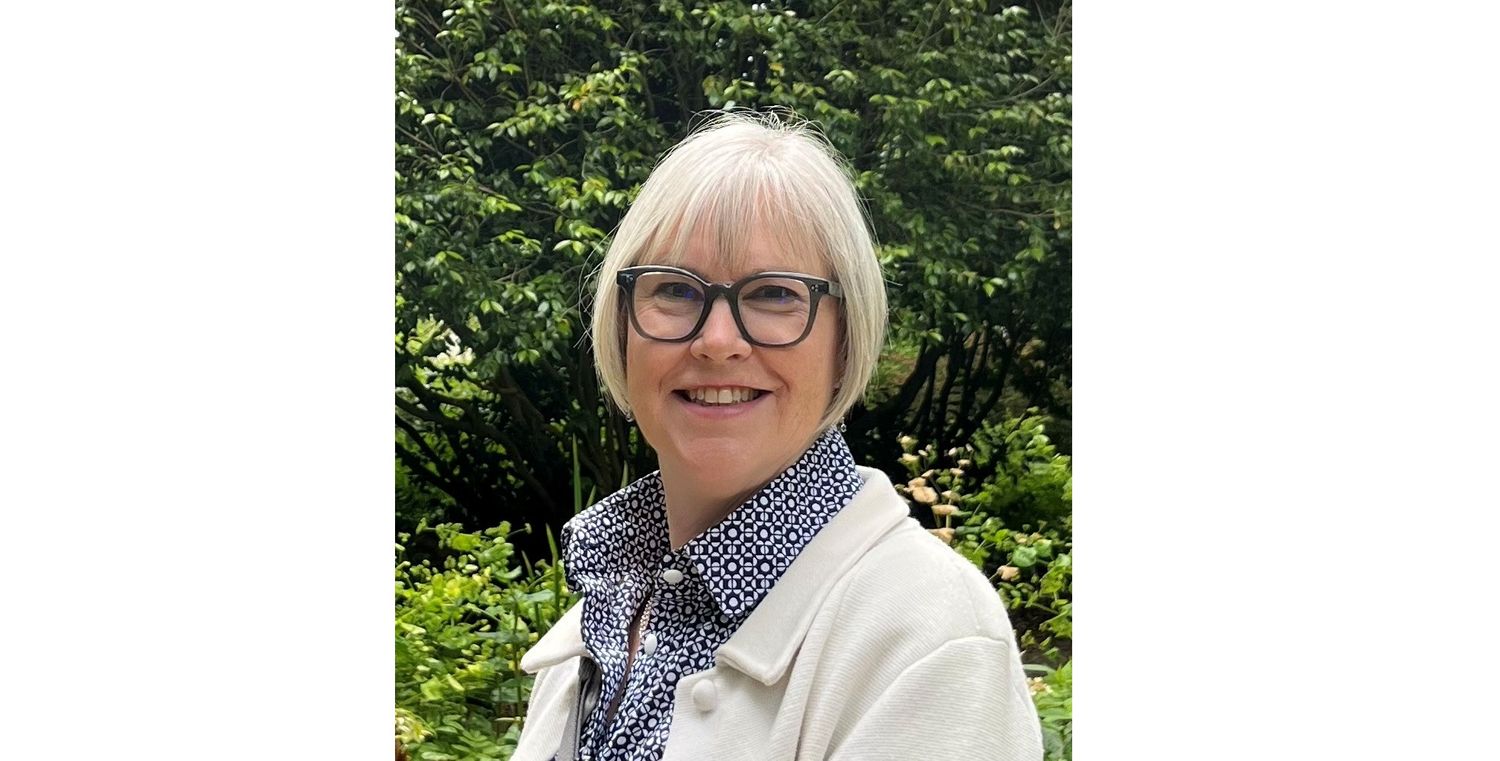
Women and Girls in Science Q&A with Professor Melanie Welham
Date: 11 Feb 2026
For this year's International Day of Women and Girls in Science, we spoke to Professor Dame Melanie Welham DBE FRSB, incoming President of the RSB, about her career in the biosciences, what she is looking forward to about working with the RSB, and her advice to girls and women who are exploring a career in biology.
What sparked your interest in biology?
I grew up in rural East Anglia, where my father was an agricultural worker. From an early age, I was aware of the flora and fauna around me, the changing seasons and how food was produced. These early influences, combined with a curiosity to understand how things worked, alongside having inspiring and supportive teachers at my comprehensive school, led to my interest in biology developing. It always seemed very natural to me and not something I had to think too hard about.
What did you study at university?
I was the first person in my family to go to university, and I studied Biochemistry at Imperial College London. I didn’t realise at the time how much this would influence the rest of my life, but it did, demonstrating how education really can – and does – transform lives.
Looking back over your career, what are you most proud of?
It is hard to choose just one example from a varied 40-year career. I am naturally proud of the contributions my research group made to understanding haematopoietic cell signalling and regulation of embryonic stem cell behaviour. In science policy, one of the things I am proudest of is the Biotechnology and Biological Sciences Research Council (BBSRC)’s 2018 ‘Forward Look for UK Bioscience’. This high-level strategic outlook/blueprint comprised three pillars: Understanding the Rules of Life, Tackling Strategic Challenges, and Building Strong Foundations. Importantly, between 2018-2025, it served as the strategic framework guiding BBSRC’s investments in world-leading bioscience research in the UK, and influenced national and international collaborations and partnerships. I am also very proud to have been involved in developing and shaping the UK’s National Engineering Biology Programme.
What is the most the memorable moment from your scientific career?
Oh goodness!! I think I would have to say the RSB 10th Anniversary celebratory dinner at the Science Museum in early March 2020. I was extremely surprised and absolutely delighted to find myself seated beside Sir David Attenborough! I had the best time talking to him about all manner of things – such an inspiration and a gentleman.
What, in your opinion, is the most interesting thing happening in biology at the moment?
For me, one of the most interesting and exciting areas is Engineering Biology — the application of engineering principles to the design and re-design of biological systems and processes. While Executive Chair of BBSRC, I was deeply involved in developing the vision for a National Engineering Biology Programme and was delighted to see it adopted as one of the Government’s key priority technologies. Engineering Biology has a very broad range of application areas. For example, designing novel medicines, including vaccines; developing bio-based routes to produce low carbon fuels, chemicals and materials; novel routes to bioremediation; biorecovery of metals; improving food security through development of disease and pest resistant crops — and there are many more. The potential of Engineering Biology to transform so many sectors, coupled with innovative underpinning bioscience research, is why I find it so exciting. I can’t imagine a sustainable future without bio-based solutions playing a central role.
You take over as President of the RSB this summer. What makes you most excited about working with the RSB?
I am excited to contribute to promoting and inspiring people of different backgrounds to engage more with biology. The RSB's members are experts in, and ambassadors for, biology. I think there are real opportunities for the RSB to harness this more effectively, catalysing greater levels of engagement. I am excited too because, given the RSB’s individual and organisational membership base, it can act as a powerful convenor and represent the voice of biology across key national, and some international, forums. I also see great opportunities for collaborating with other organisations, both across the biosciences and with organisations such as the Royal Society of Chemistry and Institute of Physics, to support science more broadly.
What is your advice to girls and women who are exploring a career in biology?
There are a huge range of career opportunities across the diverse branches of biology, so exploring this can be quite daunting and confusing. This often leads people to consider only the most obvious pathways, such as healthcare. My advice is to be led by your interests and ask yourself questions such as "what motivates me?", "do I like working with people?", "do I like discovering how things work and/or solving problems?" and "do I prefer ‘hands on’ activities?". Then, I would encourage people to seek out resources that give insight into the different career options – the RSB’s A to Z of the Biosciences is a good place to start. UK Research and Innovation has some biology-related content in its ‘101 jobs that change the world’ series. Talking to people with direct experience and seeking work-related experience can also be really helpful. In essence, try to find out as much as possible! And all career paths are different – do what feels right for you.
How can we continue to attract and retain women and girls in biology?
Data from the Higher Education Statistics Agency (HESA) show that in 2023/24, 49.8% of undergraduates studying bioscience-related subjects at university were female, suggesting biology is an attractive option for girls and women. Over the past decade, the numbers of female academic staff in the biosciences have increased to 49%, making biology appear quite balanced. However, only 32% of professors across all disciplines are female, although we lack recent data specifically for the biosciences. I think it is important to continue to inspire and engage girls and women to get involved in biology to maintain this balance. To address the imbalance at more senior levels, we need to pay particular attention to creating the conditions to retain female talent within biology-related careers. This is a multi-faceted issue, but certainly greater flexibility in employment at key stages, particularly in relation to caregiving, can play an important enabling role. This clearly requires systems-level change across the education, research, and innovation sectors. Our members can be ambassadors for both continued engagement and inspiration, as well as leading change.
Who is your favourite female scientist?
This is a tricky one! I’m not sure I have favourites as such, but I am genuinely grateful to so many women who have inspired me at different stages of my career, influenced my thinking, and supported my professional development. From a personal perspective, I would particularly acknowledge Jocelyn Bell Burnell, Doreen Cantrell, Anne Dell, Ottoline Leyser, and Janet Thornton.
I think it is important to continue to inspire and engage girls and women to get involved in biology... To address the imbalance at more senior levels, we need to pay particular attention to creating the conditions to retain female talent within biology-related careers.